

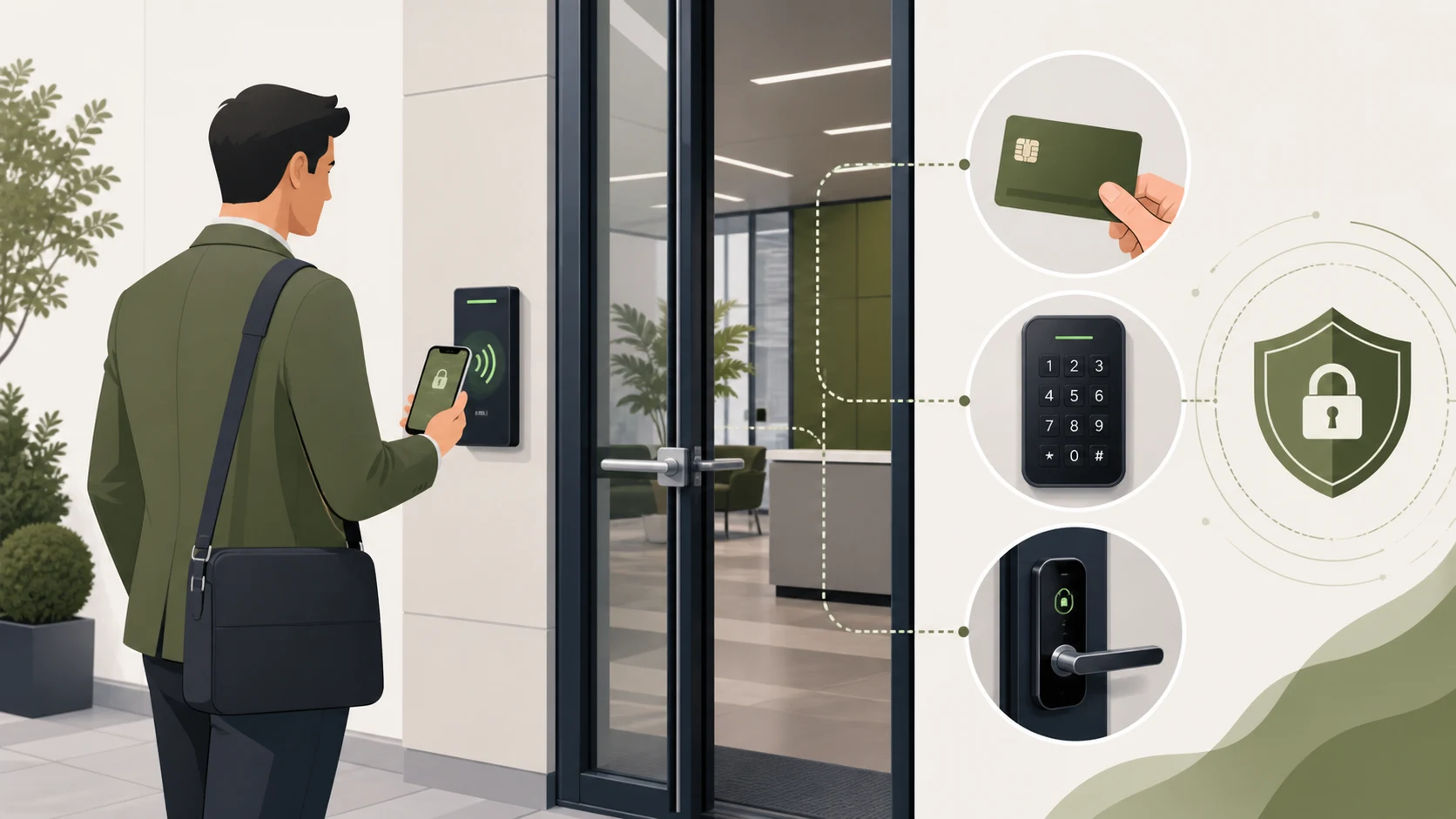
Many people think access control means opening a door with a card, code, phone, or smart lock.
That is only part of the story.
Access control is about deciding who is allowed to enter, when they are allowed to enter, and whether that entry can be verified later.
At SecurityTechLab, we look at access control as a practical security layer. It is not just a convenience feature. It helps protect homes, offices, warehouses, schools, apartment buildings, and small businesses by replacing uncertainty with rules, records, and accountability.
Access control is not only about entry. It is about permission, timing, and proof.
What Does Access Control Mean?
In security, access control means managing entry to a building, room, gate, office, storage area, or restricted zone.
A traditional key gives access, but it does not explain much. If ten people have the same key, you may not know who entered, when they entered, or whether someone copied the key.
Modern access control systems can use:
- ✓Keycards
- ✓PIN codes
- ✓Smart locks
- ✓Mobile phone credentials
- ✓Key fobs
- ✓Biometric readers
- ✓Intercom systems
- ✓Cloud-based entry management
- ✓Business access control panels
The goal is simple: allow the right people in and keep the wrong people out.
A lock protects a door. Access control protects a decision.
Cards, Codes, and Smart Locks
Keycard systems are common in offices, hotels, apartment buildings, and business properties. Each card can be assigned to a person. If the card is lost, it can usually be disabled without changing the entire lock.
PIN code systems are simple and affordable, but they have a weakness. Codes can be shared, guessed, observed, or forgotten. If everyone uses the same code, the system becomes much weaker.
Smart locks are popular in homes and small offices. They can provide phone-based control, temporary access, remote locking, and entry history. But a smart lock is not automatically a professional access control system. It depends on the device, setup, users, and response plan.
Shared keys create uncertainty. Individual access records create accountability.
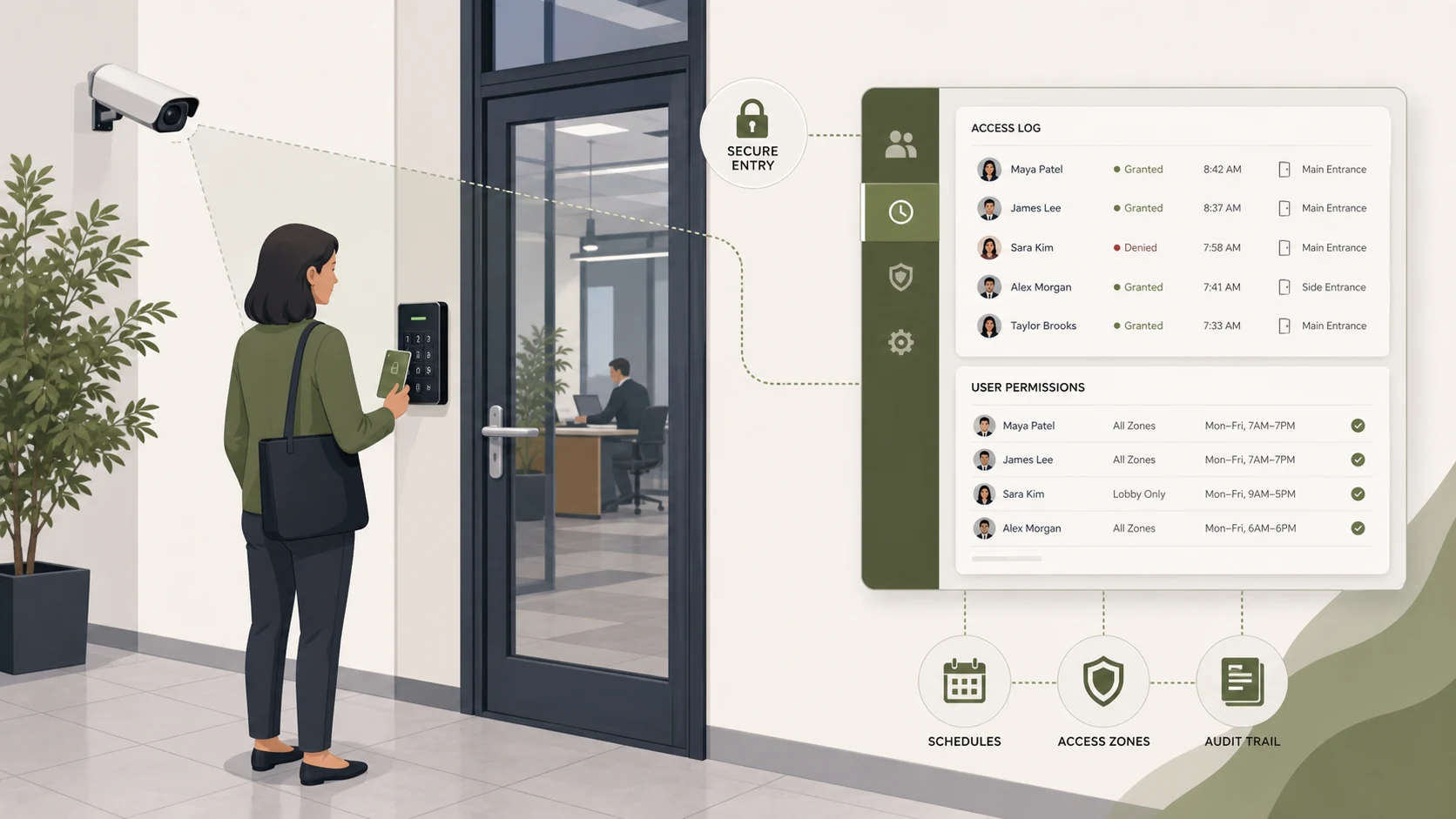
Access control becomes more useful when every entry method is connected to permissions, users, schedules, and records.
Access Control for Small Businesses
For a small business, access control can be more important than people realize.
It can help answer practical questions:
- ?Who opened the office this morning?
- ?Who entered the storage room?
- ?Was access removed after an employee left?
- ?Can a contractor enter only during approved hours?
- ?Did someone enter after closing time?
- ?Are sensitive areas protected?
This matters because business security is not only about stopping criminals. It is also about controlling daily operations.
A good access control system can reduce key problems, limit unnecessary access, support investigations, and create a basic audit trail.
The value of access control is not only who gets in, but who should not.
Access Control Is Stronger When Combined With Other Security Layers
Access control works best as part of a complete security setup.
A door reader can show that a card was used. A camera can show who actually walked through the door. An alarm system can detect forced entry. An NVR can record the event. A professional security system can connect these layers into a stronger protection model.
That is why serious security is never one device alone. For a broader view, read our guide on why security technology matters more than ever.
Access control is strongest when entry, video, alarms, and response work together.
Common Access Control Mistakes
Many access control problems come from poor habits, not bad technology.
Common mistakes include:
- ×Using one shared code for everyone
- ×Failing to remove old employees
- ×Giving too many people access
- ×Placing readers without camera coverage
- ×Ignoring door hardware quality
- ×Not reviewing access logs
- ×Using smart locks without a backup plan
Technology helps, but discipline matters.
Access control fails when permission is granted but never reviewed.
Final Thought
Access control is not just about replacing keys. It is about creating a controlled, visible, and accountable entry system.
For a homeowner, that may mean a smart lock with careful user management. For a small business, it may mean keycards, access schedules, cameras, and event logs. For a larger organization, it may become part of a full professional security system.
The real question is not only: “Can this door open?”
The better question is: Should it open, for this person, at this time — and can we prove it later?
FAQ
What is access control in security?
Access control is the process of managing who can enter a building, room, gate, or restricted area, and under what conditions.
Is a smart lock the same as access control?
A smart lock can be part of access control, but it is not always a full access control system.
Are PIN codes secure?
PIN codes can be useful, but shared or predictable codes are weak. Individual codes are safer.
Why are keycards better than traditional keys?
Keycards can usually be disabled, tracked, and assigned to individual users. Traditional keys are harder to control once copied or lost.
Do small businesses need access control?
Yes. Small businesses often benefit from controlled entry, access records, employee permissions, and reduced key-management problems.
What makes access control stronger?
Access control becomes stronger when it is combined with cameras, alarms, good door hardware, regular user reviews, and a real response plan.
Continue with practical security technology guides.
Explore more SecurityTechLab articles on cameras, alarm systems, NVR recording, smart security, access control, and professional security technology.
Explore Professional Security Guides