

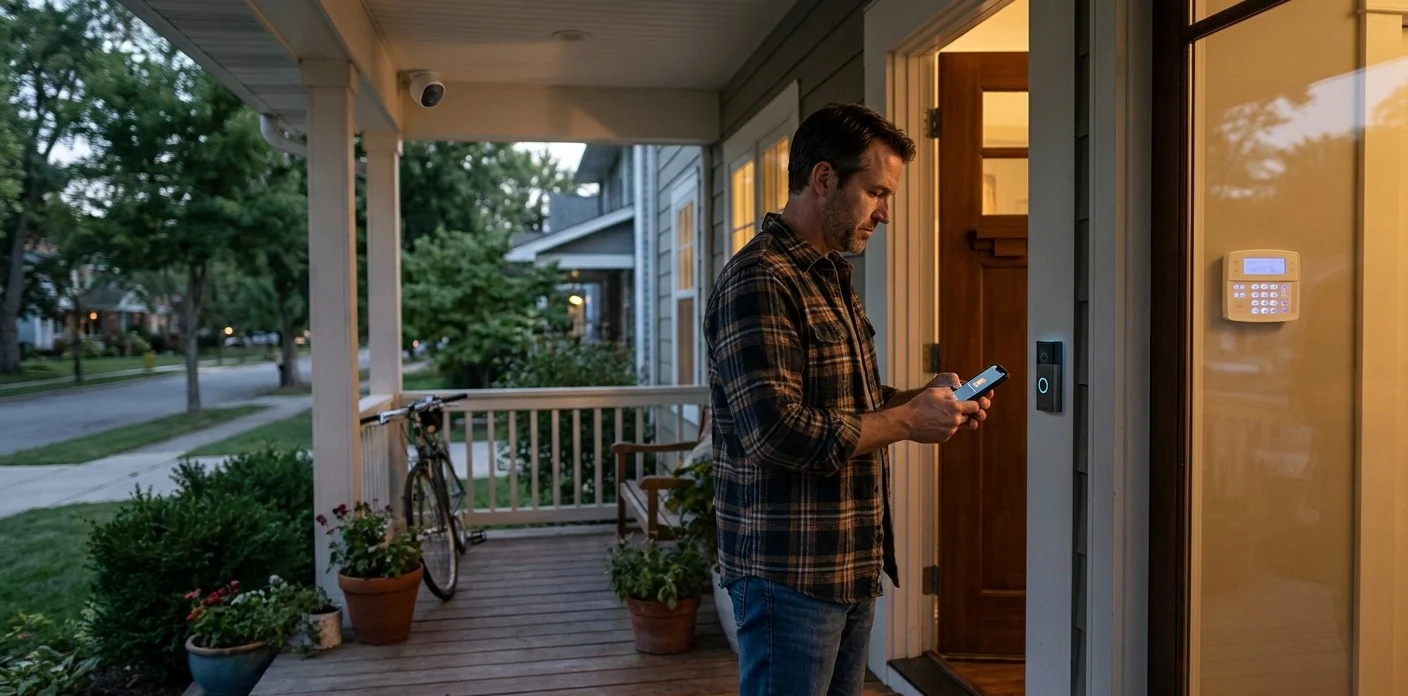
The better question is simple: What happens when something actually goes wrong?
At SecurityTechLab, our mission is not to impress people with technology words. We want ordinary homeowners, families, and small business owners to understand what really protects them. We work for people who want safer homes, safer properties, and clearer decisions. For a broader foundation, start with our guide on why security technology matters more than ever.
Smart Security vs Professional Security: Quick Comparison
Smart security and professional security are often presented as opposites. In reality, they are different layers that can be useful or weak depending on design, setup, monitoring, and response.
| Category | Common examples | Main strength | Main weakness |
|---|---|---|---|
| Smart security devices | Ring, Google Nest, Arlo, eufy | Easy app control, cameras, alerts, fast setup | You may be the only person expected to react |
| Smart alarm systems | Ring Alarm, Arlo Home Security System, SimpliSafe self-setup style systems | Sensors, sirens, mobile alerts, optional monitoring in some plans | Protection depends heavily on setup, alerts, and user response |
| Professional security systems | ADT, Vivint, professionally installed monitored systems | 24/7 monitoring, installation support, response workflow | Higher cost, contracts, and still not immune to poor design |
| Hybrid systems | Smart devices with monitoring plans | Convenience plus some response layer | Users may misunderstand what is actually monitored |
Ring connects cameras, doorbells, app control, and in some plans professional monitoring options. Google Nest focuses strongly on smart cameras, doorbells, locks, and awareness devices. Arlo and eufy are well-known smart security brands built around cameras, wireless devices, AI detection, and app control. ADT and Vivint represent the more traditional professional side, with 24/7 monitoring and professional service models.
The Real Difference Is Not the Brand
A smart camera can show you who is at the door. A smart alarm can send a push notification. A professional system can send an alert to a monitoring center.
But none of that matters if the response fails.
A smart security device is not the same as a professional security system.
That does not mean smart devices are bad. Many are useful. They can help people see, record, and react faster. But a device is not a plan.
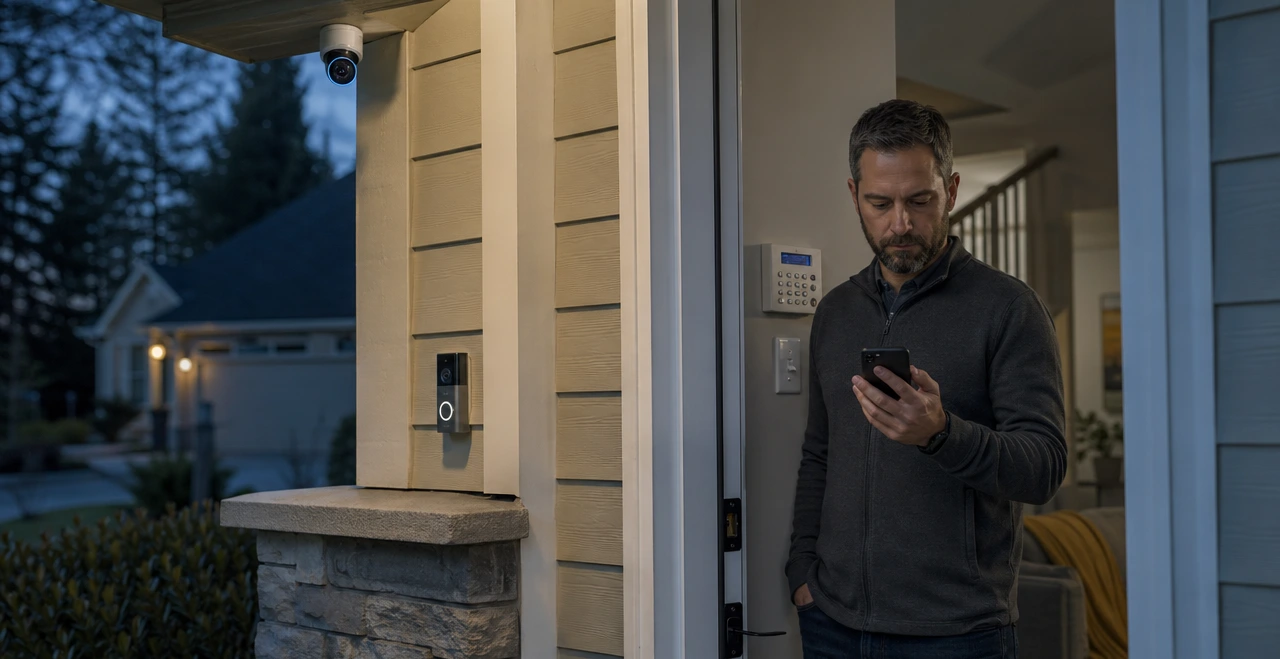
Real security is not only the device. It is the alert, the response, the setup, and the way the system behaves under pressure.
What Smart Systems Do Well
Smart systems are good for visibility. They are usually easier to install, easier to control from a phone, and easier to expand. This is why many homeowners first discover modern protection through smart security systems.
They are useful when you want doorbell video, camera alerts, motion notifications, remote control, and simple home awareness. For many families, this is already a major step forward.
But there is a weakness. If the phone is off, the owner is asleep, the internet fails, or nobody reacts, the system may only document the problem.
Detection without response is not protection.
What Professional Systems Do Well
Professional systems are built around response. Monitoring centers, installed sensors, sirens, and emergency procedures can create a stronger safety layer. This is the core idea behind professional security systems.
- ✓Nobody is home.
- ✓The owner is unavailable.
- ✓A break-in happens at night.
- ✓A fast response is needed.
But professional does not automatically mean perfect. A poorly placed siren, weak alarm code, bad sensor layout, or slow reaction can still weaken the system.
Professional monitoring does not fix poor system design.
The same rule applies to alarms. A system can have sensors, a keypad, sirens, and alerts, but the real value depends on placement, code discipline, and response. For more practical detail, read our guide to alarm systems.
The Right Question
The real question is not: “Is it smart or professional?”
The real question is: Will this system still work under pressure?
- 1Detection
- 2Notification
- 3Redundancy
- 4Controlled access
- 5Reliable response
- 6Realistic testing
Security is not a product. It is a system with response.
Final Thought
Smart security can be useful. Professional security can be powerful. But neither category guarantees real protection by itself.
In security, the label does not protect you. The behavior of the system does.
Security is defined by behavior under failure.
Continue with practical security technology guides.
Explore more SecurityTechLab articles on alarm systems, cameras, NVR recording, smart security, and professional security technology.
Explore Smart Security Guides